Leadership Lessons with Marketing and Communications leader Alka Winter
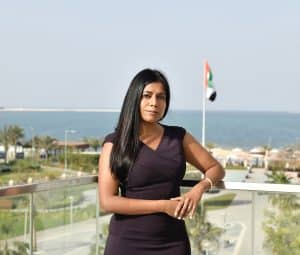
In our latest leadership lesson, Amy Hayer, Managing Partner at Hanson Search, spoke with Marketing and Communications leader Alka Winter about the sovereign creator, what agentic AI does to a comms team and the fundamentals that still hold.
What trends and shifts are you seeing that will influence how your communications function engages with stakeholders, media and internal audiences?
There are a couple of things I’ve been seeing, and they’ve hit marketing, PR and comms all at once. One is the rise of the sovereign creator, this move from the brand (center) out to individual creators. Substack is a great example, valued at around $1.1 billion with 50 million users, and it looks less like a newsletter tool now than part of the media infrastructure. What creators and journalists sell there is conviction. When you look at The Economist, which is the complete opposite, a century old institution where most articles have no byline because the collective voice means more than the individual journalist, whereas now a conservative writer has an audience for their views and a liberal one does too and you know exactly where they stand.
Then there’s AI, and the move from generative to agentic. You’re going from share of voice to share of model. From the outside, consumers are delegating research to an agent and in some cases the purchasing too, and from the inside, organizational point of view, AI has stopped being a bolt-on, so you’re looking at how you run your departments. AI visibility sits alongside that. Traditional SEO becomes generative engine optimisation, and SEO now becomes search everywhere optimisation, and while there’s plenty to do on your own site with llms.txt files, schema and markdown, 80% of the work is outside the website, and that’s where comms has such a big role, because the models look for credible sources and that comes from the PR work.
The third is the attention economy, and video is one of the most competitive markets in it. That fight isn’t over quantity of hours, it’s the quality of what you get from that hour. I was checking YouTube’s 2025 annual revenue and it was $60 billion, more than Netflix and more than Disney, NBC, Universal, Paramount, Warner Bros / Discovery combined. That’s really pointing to the power of video and individual creators.
Do comms functions need to be structured differently as a result?
We’re really at the cusp of that, but it’s still being looked at from a tools perspective. AI is more of a bolt on than fundamentally changing how we design our teams to facilitate human/agent collaboration.
The new world is doing less of the work and more of the orchestration. Thinking in workflows not functions, determining what quality looks like and having the right judgement to make those calls. We’re still at the stage of layering in AI tools, but at some point the marketing organisation will need to be rebuilt.
Which PR and reputation trends do you see shaping 2027 for in-house teams?
With the attention economy, agentic AI and the sovereign creator all landing together, it accelerates something you and I already know, which is seeing around corners. Agentic AI works as a sparring partner for that. I remember writing crisis communications manuals from scratch and going through the scenarios one by one, and now you could build one in under half a day and stress test it in so many different ways.
The fundamentals still matter though. Fifteen years ago I’d take a candidate into another room, give them a fictional scenario and ask for a press release, because I wanted to see whether they could think in terms of what a journalist would want. One of my former team members said to me, I know you keep harping on about writing well, but you don’t really need to anymore. I was taken aback, because a lot of what gets generated is a bit tone-deaf and a bit vanilla and knowing great writing from just writing is really a skills set that takes time and practice.
Bringing PR at the outset of a campaign, as part of the creative agency and the media strategy briefing, is something we’re seeing more of as a practice and I wholeheartedly encourage this. Some of our best campaigns were PR-led, and I always make sure my PR agencies are there at the start.
Is there a communications trend right now that you think is overhyped?
AI influencers and synthetic spokespeople. There’s something disingenuous about it, because we’re inventing people who don’t even exist, and I read that 44% of consumers are uncomfortable with brands using them. I actually subscribe to one, so I do consider it. I follow Chloe vs History, an AI influencer who goes back in history to Tudor England and Ancient Greece and retells events. It’s snackable content, but I don’t think it’s sustainable.
I’m also seeing a lot of leadership comms, which is great. But when top tier leaders act as influencers, there’s a fine balance to strike that stays true to the brand and to the person.
How is the adoption of AI affecting the expectations placed on your team?
The expectation on quality shifts, so a team that used to generate now has to orchestrate and evaluate good work, and making it sound human is important. Then, as their time gets freed, I’d want to see team members work on internal relationships, especially wither other departments because MarCom departments are normally siloed when it comes to finance and to procurement. Does the team have finance fluency and able to read P&Ls and balance sheets effortlessly? Do they understand the business from a finance perspective or understand SLAs and other procurement practices?
My team have had long discussions with procurement about why a PR agency RFP couldn’t be seen the same way as another supplier. You couldn’t quantify it, because the value came in different forms. So that time should go towards educating colleagues internally, and internal PR is one of the most useful things we’d never given enough time to before which we can do a better job now.
How has your approach to leadership evolved, and what fundamentals still anchor your style?
Eighteen years in this region gives you exposure to different cultures and different companies. It showed me what I wanted to take from those styles, and more importantly what I didn’t like. For me, and it’s how I want to be led, and that’s transparency, candour and psychological safety so people can bring their best selves to work. My role becomes how do I help unlock that through strategic clarity and building a culture of transparency.
At Ras Al Khaimah Tourism Development Authority, I came in right at the start of COVID, and by the time I left I had 15 colleagues from 11 different countries and across three generations (Gen X to Gen Z). In the UAE most of us are expats, so you become more than a leader, you’re really part of their lives. Everyone’s so individual and it’s about meeting them where they’re at.
What must the modern in-house comms leader master that wasn’t essential five years ago?
Being a business leader, and gaining board level influence along with it. Gone are the days where we worked in PR, comms and marketing in a bit of isolation. Being commercially fluent becomes critical when you look at budgets and the justifications for them, and I’ve presented to boards asking for marketing and PR budget increases, with the analytics around it.
The average CMO tenure is only around 4 years, and I think part of the challenge is just how broad the remit has become. You can’t be the expert in everything anymore and an agentic organization is making this all the more real. You need strong team members around you, and you need to know enough to connect the dots.
If you were coaching a rising in-house communications leader, what guidance would you offer?
When you inherit people or bring them over, they’re naturally curious, and developing that curiosity really needs to be prioritised. Otherwise, it’s fitting in and getting along, which becomes a habit you want to break. There are studies showing curiosity releases dopamine and leads to higher drive and creativity. I read that people who go on smoking breaks produce better ideas because they’ve taken the time out of their routines. I’m not encouraging smoking but there’s some truth in taking time away to help reset and make space for creativity.
Then there’s honing that ability to see around corners. It isn’t only about what can happen in a crisis, it’s what’s happening in the business and helping to mitigate it. I was speaking to my former team recently as they work through a live situation in the region, and they’ve shifted gears from communicating with media to communicating with partners and clients. Being able to shift gears is going to be really important.
We are committed to equality of opportunity for all. You can access our Diversity and Inclusion Policy here.
Amy Hayer: Amy is an executive search professional with over 15 years of experience building and scaling high-performing teams across international markets. She has a strong foundation in healthcare and pharmaceuticals, having partnered with leading companies and consultancies to deliver senior-level hiring across the sector. Amy now specialises in scaling...
Related articles
Why Your First American Sales Hire Matters More Than Your Product
Waiting for the Budget? Your next leader isn’t.
What’s Working for Agencies Right Now: Five Lessons from our Agency Leaders Roundtable
What It Really Takes to Lead a Trade Association in Brussels


















 Career Enquiry
