Katie Simpson, Managing Partner at Hanson Search, spoke to Emilie Oldknow, CEO at Hanbury Strategy. They discussed how geopolitical volatility is reshaping client expectations, what great communications looks like in 2026 and the leadership principles that never go out of fashion.
Looking back at the last 12 months, what major shifts in client expectations or industry dynamics have most affected how Hanbury operates?
Consultancies like Hanbury always operate in a fast-paced and unpredictable environment, and that has been unrelenting over the past 12 months. The world is a more volatile place, and that has had a direct bearing on the relationships we have with our clients and on what they fundamentally need from us. Geopolitical instability, rapid technological transformation and political turbulence have all been major factors, and crucially they have all converged at the same time. That has made political and reputational risk a standing agenda item in any boardroom, which has really increased the visibility and the requirement for agencies like Hanbury.
Clients need agencies agile and responsive enough to operate in that volatile world. They want advisors who can connect the dots across comms, policy and politics, backed by data and research, and who can provide confidence through both breadth of capability and genuine depth of expertise.
We are being brought in earlier and asked more challenging questions around issues such as licence to operate, creating more favourable conditions for growth, unlocking new markets, and supporting complex transactions and litigation. There is also much greater scrutiny on budgets in such a tight fiscal environment, particularly across corporate communications and public affairs, which means we have to demonstrate our value and our impact from day one. We do that well, because we have always gone the extra mile and we focus on outcomes, not activity. At Hanbury, we don’t do timesheets. We focus on results, and that sets us apart from other agencies of our size.
What emerging comms trends have been defining 2026, and which do you think are overhyped?
I think it is very simple. People are crying out for authenticity and simplicity. You can see it in politics, where the public are gravitating towards figures who know what they stand for and who communicate it in a way that genuinely reflects people’s concerns. Authenticity and simplicity aren’t really trends. They are core principles. People want their message carriers, whether politicians, brands or organisations, to be relatable, understandable and straightforward.
The real sweet spot for Hanbury is that intersection between polling and data, which is about understanding your audience, how your messages land and what matters to them, combined with political insight and networks, and then layering over that an authentic narrative. Getting back to basics is what defines great communications in 2026.
Are clients being more efficient or more experimental in how they approach comms?
It is genuinely a real mixture. It depends entirely on the client and where they are in their story, because we rarely see the same challenges in the same place. They are always nuanced and individual to where a business sits, what it is trying to achieve and what its objectives are.
That said, whether a client is in a risk-averse situation or feels it wants to take risks, both groups expect the same things from us. They want depth of knowledge, evidence-based advice when we do recommend a risk or a left-field solution, a relentless focus on outcomes and an agency that truly understands their business, their stakeholders and the environment they are operating in. We try to anchor all our advice and our work on exactly those things.
How has the role of an agency leader evolved, and what leadership principles do you believe never change?
The biggest evolution since I joined Hanbury has undoubtedly been AI. When I first started, it might be an individual having a quick check on ChatGPT to help draft something. Eighteen months on, we are developing and implementing tools that can genuinely help improve the agency’s day-to-day efficiency. That is the biggest change.
The internal reality of AI is more nuanced than the public debate suggests. Society has got into this binary, zero-sum debate of everything or nothing, but we have found it to be a much greyer area. We are very clear that Hanbury remains about our brilliant, talented people, their judgement and skills. AI is additive to that. It makes us more efficient and faster in responding to our clients’ needs.
In terms of the core principles that never change, delivering outcomes and measuring success by impact rather than activity is fundamental. So too is trust and responsibility. I never ask somebody to do something I am not prepared to do myself. I want people to know I will roll up my sleeves, get into the details, be on client calls and work through difficult issues side by side with them. And if something goes wrong, you never seek to blame others. You learn collectively and move on.
Finally, I always want to surround myself with people who think differently to me. Differences of opinion and outlook lead to better outcomes. That is a principle I will never change.
Where are you investing most heavily to prepare for the next wave of comms needs?
It always comes back to people. On the comms front, we spend a great deal of time and energy recruiting the right people to bring new thinking and different experiences to ensure we stay at the cutting-edge of comms advice and insight, which is increasingly important in a turbulent political, media and business landscape.
But 2026 has also been Hanbury’s year of expansion. We have expanded into Australia, New Zealand and the US, and we are looking to grow further in the EU and into new sectors and markets. Our clients increasingly want not just comms and political insight in a particular country but an understanding of what is happening all over the globe, and how that affects their business in the UK and EU, and vice versa. Being able to offer that as a full-service proposition, spanning public affairs, comms, reputational management, risk and now geographies, is where we are investing.
So there are two big investment areas for 2026: expansion and innovation.
How do you maintain strong strategic relationships when clients and stakeholders are under more pressure than ever?
For me personally, I am direct. Maybe that is a Midlands thing. And I think clients genuinely appreciate it. Being available is also a key tenet of what we do. Clients know they can always ring and speak to their main contact, their confidant. We don’t count hours, we count outcomes, and that means availability is non-negotiable.
Beyond that, it comes down to really getting under the bonnet of a business, understanding what makes it tick, why it needs your help and what you can do to support it in a genuinely bespoke way.
If you could give one piece of advice to the next generation of agency leaders, what would it be?
Don’t stop until the job is done. Never give in, because you can always sort something out and there is always an opportunity to deliver.
But more than anything, don’t try to change who you are to fit someone else’s idea of what you should be. Ultimately you will come unstuck. And it comes back to what people want from their leaders, business heads, politicians and communicators. They just want authenticity. So be yourself, ride the wave and it will all be okay.
Whether you’re hiring top leadership talent or thinking about how the Employment Rights Act 2025 impacts your hiring plan, our team would be delighted to support you.
Katie Simpson works at the senior end of the global Corporate Affairs and Sustainability market across both agency (CEO, MD, Head of and Director) and in-house positions (Director of Corporate Affairs, Director of Communications, Director of Marketing and Communications, Head of External Affairs etc).
Hanson Search Group is a global talent consultancy providing executive search, recruitment and leadership advisory services. Built on more than twenty years of trusted relationships, we operate as a connected global platform of specialist practices with expert consultants embedded in key markets.
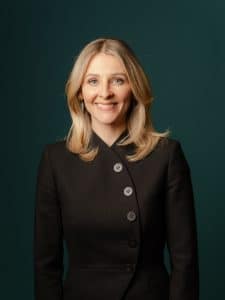
Katie Simpson: Katie specialises in senior, global executive search across Corporate Affairs and Communications, with particular depth in the UK and USA. Before moving into search, she spent a decade working in communications - running UK and international campaigns for various clients including Sony, GSK, EA, BT, Unilever and Microsoft....
Related articles
Key Takeaways from the Khaleej Times Future Workforce Summit
What Does A Public Affairs Officer Do?
Talent Mapping and Executive Search: How to Build a Stronger Leadership Pipeline
Leadership Lessons with Marketing and Communications leader Alka Winter




















 Career Enquiry
